Photobiomodulation: Red and Near-Infrared LED Therapy




In short: Photobiomodulation (PBM) uses red and near-infrared wavelengths—without UV—to trigger biological responses in exposed tissues. The mechanisms studied include, in particular, the absorption of light by cellular chromophores and the modulation of mitochondrial signaling. The effects vary depending on wavelength, irradiance, dose, and indication; therefore, protocols and precautions must be tailored accordingly.
Summary references: de Freitas & Hamblin, 2016; WALT dosage recommendations.
What is photobiomodulation?
Photobiomodulation, also known as red light therapy or LLLT (Low-Level Light Therapy), refers to the use of specific wavelengths of light to trigger a biological response in the exposed tissues. Unlike light therapy -which affects circadian rhythms via the retina- PBM directly targets the cells in the treated area. This page covers the essentials; each topic links to a dedicated, more detailed guide.
To get to the point: definition and uses of photobiomodulation · How It differs from light therapy · History of PBM.
How does photobiomodulation affect cells?
Red and near-infrared light is absorbed by the mitochondria, particularly by the enzyme cytochrome c oxidase. This absorption stimulates the respiratory chain and increases the productionof ATP, the cell’s energy source. This triggers a cascade of effects: reduced oxidative stress, modulation of inflammation, improved microcirculation, and activation of repair processes.
The right balance is key: too little light has no effect, while too much negates the benefit—this is the biphasic curve.
Further Reading: Cellular Mechanisms · The Role of ATP · Mitochondria · The Biphasic Curve.
Red light or near-infrared light: What's the difference?
Red light primarily affects the surface (skin); near-infrared light penetrates deeper (muscles, joints, brain). Most treatment protocols combine the two, depending on the goal.
Specialized guide: Red vs. near-infrared in photobiomodulation.
Which benefits of photobiomodulation are best documented?
PBM is studied and used in many different settings. Its benefits depend on the protocol, the device, and the indication.
- All the benefits (overview)
- Skin: collagen, radiance, wrinkles, acne, redness
- Pain and inflammation
- Sports: recovery and performance
- Sleep
- Brain and cognitive functions
- Immunity and vitality
- Hair regrowth
How is photobiomodulation used in medicine?
Beyond wellness, PBM has been shown to have documented clinical applications (dermatology, sports medicine, neurology, supportive oncology) and is increasingly being adopted in hospitals in France.
Clinical example: In a multicenter randomized trial involving 85 patients, the intraoral protocol under study resulted in a 37% incidence of severe mucositis, compared with 57% for the sham treatment. This result pertains to a specific device and protocol and cannot be generalized to all devices (source publication).
Complete Report: Photobiomodulation: mechanisms, evidence and medical applications · Scientific Publications.
What happens during a photobiomodulation session?
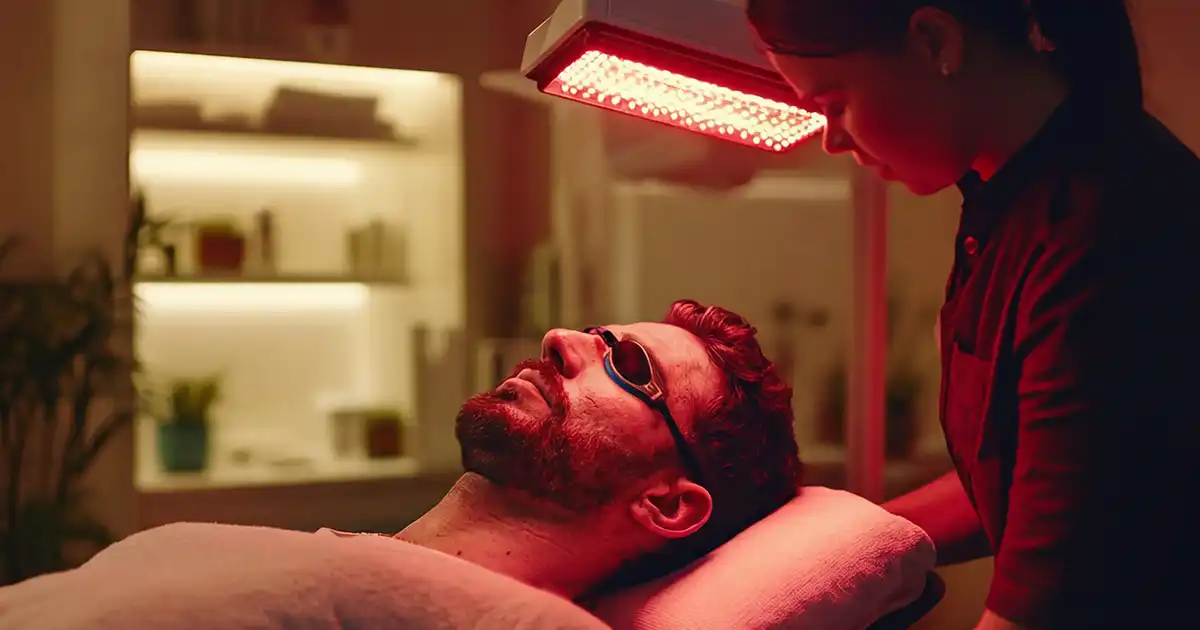
A treatment session is simple and painless: the area is exposed at the correct distance for the prescribed amount of time. Consistency is more important than duration.
- What happens during a session?
- Session duration · ideal frequency · how many per week
- Preparing for your session
Safety: Is photobiomodulation dangerous?
PBM is noninvasive, involves no UV radiation or damaging heat, and is generally well tolerated. There are contraindications (pregnancy, active cancer unless otherwise advised by a doctor, photosensitive epilepsy, photosensitizing medications) that must be observed.
How do you choose a photobiomodulation device?
The right device depends on the intended use, the treatment area, and the context of use. Factors to check: wavelengths, power (irradiance), dosage (J/cm²), optical quality, and certifications (CE, CE Medical).
- Which photobiomodulation device should you choose?
- LED panels · lasers · LED face masks
- For the whole body: discover the Body Boost Bed photobiomodulation red light therapy bed (CE Medical device).
Frequently Asked Questions about photobiomodulation
What exactly is photobiomodulation?
It is a form of light therapy (red and near-infrared) that stimulates cellular activity without UV rays or damaging heat. It is also known as PBM, red light therapy, or LLLT.
Photobiomodulation and light therapy—are they the same thing?
No. Light therapy uses white light to affect the circadian rhythm through the eyes. Photobiomodulation uses targeted wavelengths to act directly on the exposed tissues.
What are the proven benefits of photobiomodulation?
The best-documented uses relate to the skin, pain and inflammation, athletic recovery, sleep, cognitive function, and hair regrowth.
How long does it take to see results?
It depends on the condition and how often the treatment is administered: sometimes as early as the first few sessions for pain relief, and generally 4 to 8 sessions for skin treatment.
Is photobiomodulation dangerous?
It is considered safe and well-tolerated, with no UV or EMF exposure when using reputable devices. There are contraindications that must be observed.
Can you do photobiomodulation at home?
Yes, with the right equipment and reliable guidelines. Start gradually and follow the recommended dosages.

Make an appointment