How PBM Works
Published on
May 8, 2025
Understanding the biphasic curve in photobiomodulation
Reviewed and approved by Dr. Sébastien Viaud, a general practitioner and member of the SFPBM.
In short: The biphasic curve describes the dose-response effect of photobiomodulation: at low doses, light stimulates the cell, but at too high a dose, it slows down or blocks the desired effect. Finding the right intensity is therefore essential, as an insufficient dose has no effect, while an excessive dose becomes counterproductive. When properly adjusted, a treatment protocol maximizes the benefits for pain relief, wound healing, and cell regeneration.
When "more" doesn't mean "better"
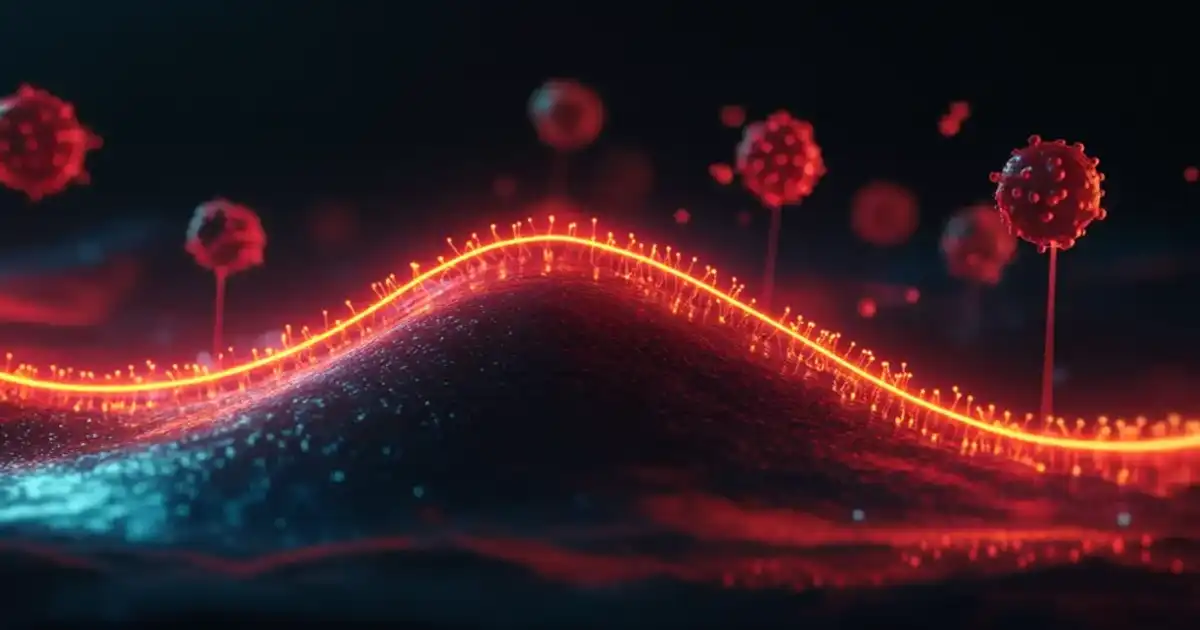
Photobiomodulation is based on the idea that light stimulates cells. But be careful: too much light can have the opposite effect. This is known as the biphasic curve.
What is a biphasic curve?
It is a two-step process:
- At low doses, light stimulates the cell.
- At high doses, it slows down or blocks the effect.
This means you need to find the right intensity to achieve optimal results.

Why is this important?
This principle explains why a PBM protocol must be properly regulated:
- if the dose is too low, nothing happens;
- If it is too strong, the effect can be counterproductive.
By following the biphasic curve, we maximize the effects on:
✅ pain, ✅ healing, ✅ cell regeneration.
Dosimetry Calculations in Photobiomodulation
Results
Energy density
15J/cm²
04 J/cm²20 J/cm²30+
Recommended time
3:20
per 10 J/cm²
The optimal dose for most photobiomodulation applications ranges from 4 to 20 J/cm². Adjust the settings according to your specific needs.
See also
Our guides