Frequently Asked Questions
Body Boost Bed the Body Boost Bed a lot of electricity?
The Body Boost Bed bed has a power rating of 1,500 watts. Even if you operate it every day, seven days a week, your electricity bill will remain quite reasonable. Plus, all you need is a standard electrical outlet to power your bed.
To customize your costs based on your operating days, please visit this page for more information.
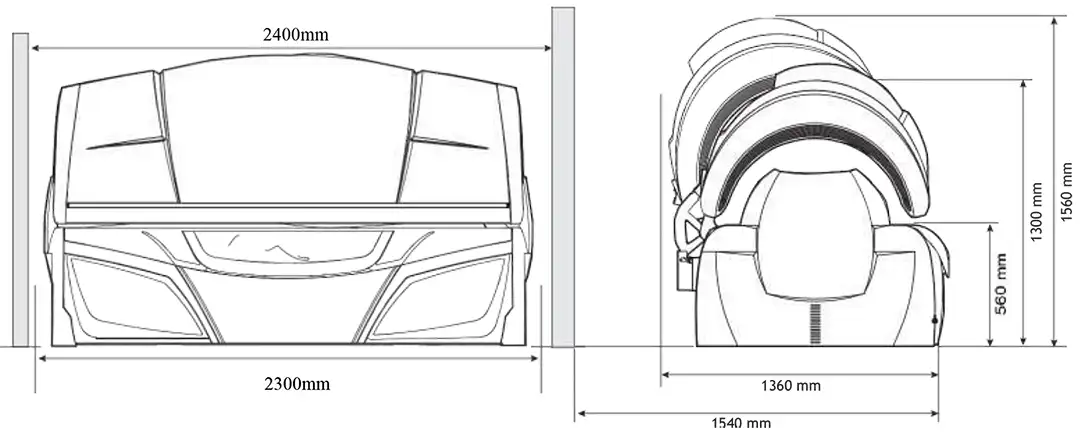
What are the dimensions and weight of the Body Boost Bed bed?
The Body Boost Bed bed is 2.30 meters long and 1.36 meters wide, and weighs 220 kg.
Can we try out the Body Boost Bed
Yes, it is certainly possible to try out the LED bed. We invite you to check the map of Body Boost Bed locations.
What is the warranty period for the bed?
The warranty covers parts and labor for two years. The LEDs have a lifespan of over 50,000 hours, which translates to an expected lifespan of 13 years based on 10 hours of use per day. In addition, we offer regular and preventive maintenance contracts.
What is photobiomodulation?
Photobiomodulation is a technique that uses low-intensity light, typically in the red and near-infrared spectrum, to interact with biological tissues.
These wavelengths are absorbed by certain cellular structures, particularly in the mitochondria, which can influence biological processes such as cellular metabolism, inflammation, and nerve signaling.
Photobiomodulation is being studied in a wide range of medical and scientific contexts, including pain management, wound healing, neurological functions, oral health, and supportive care in oncology.
It differs from surgical lasers in that:
- low power,
- the absence of destructive heating,
- a non-invasive approach.
Its use and effects depend on the treatment parameters (wavelength, dose, duration, and treatment area), which have been the subject of numerous clinical studies.
Is there any UV (ultraviolet) radiation?
The Body Boost Bed LED bed, as well as all photobiomodulation devices offered by Bioledtherapy, are guaranteed to be completely UV-free.
At what age can you start using the Body Boost Bed for photobiomodulation Body Boost Bed
Ages 7 and up.
Is it really safe?
There is an extensive body of clinical literature on photobiomodulation. At the doses used by the Body Boost Bed, the adverse effects reported in studies are rare and are most often transient. There are contraindications, which are listed in the following question. The device does not emit UV light.
Read the package insert and consult a healthcare professional if your situation requires it.
The Valenciennes Hospital and other healthcare facilities use photobiomodulation as part of their treatment protocols.
Do you have to be a medical professional to use it?
The LED bed is classified as an electrical device intended for general well-being. As such, anyone of legal age may use it.
After how many sessions can you start to feel the benefits of the Body Boost Bed
Results vary depending on the individual and their goals. Some users report feeling relaxed as early as the first few sessions. Published photobiomodulation protocols generally span several weeks. The practitioner treating you will adjust the frequency based on your specific situation.
Can anyone benefit from photobiomodulation with the Body Boost Bed
Contraindications:
• Pregnancy and/or breastfeeding,
• Epilepsy, a history of photosensitivity, or use of photosensitizing medications,
• Acute skin condition requiring dermatological treatment,
• Claustrophobia,
• A person with cancer, unless authorized by a healthcare professional,
• Children under 7 years of age,
• Maximum user weight: 135 kg.
Are there any protocols?
The Body Boost Bed offers preset 25-minute programs. The frequency recommended in the literature on full-body photobiomodulation is 2 to 3 sessions per week over several weeks. The professional who meets with you will determine the appropriate schedule and explain the process before your first session.
Detailed programs are included in the documentation provided to the equipped facilities.
Is there a minimum or maximum frequency?
Generally speaking, "overdoses" in photobiomodulation result in a lack of beneficial effects.
Healthcare professionals recommend not exceeding 21 joules per square centimeter over a consecutive period of 31 days.

Make an appointment