Photobiomodulation and reactive oxygen species (ROS)
To Understand It Fully: The Paradox of Beneficial Stress
What are ROS?
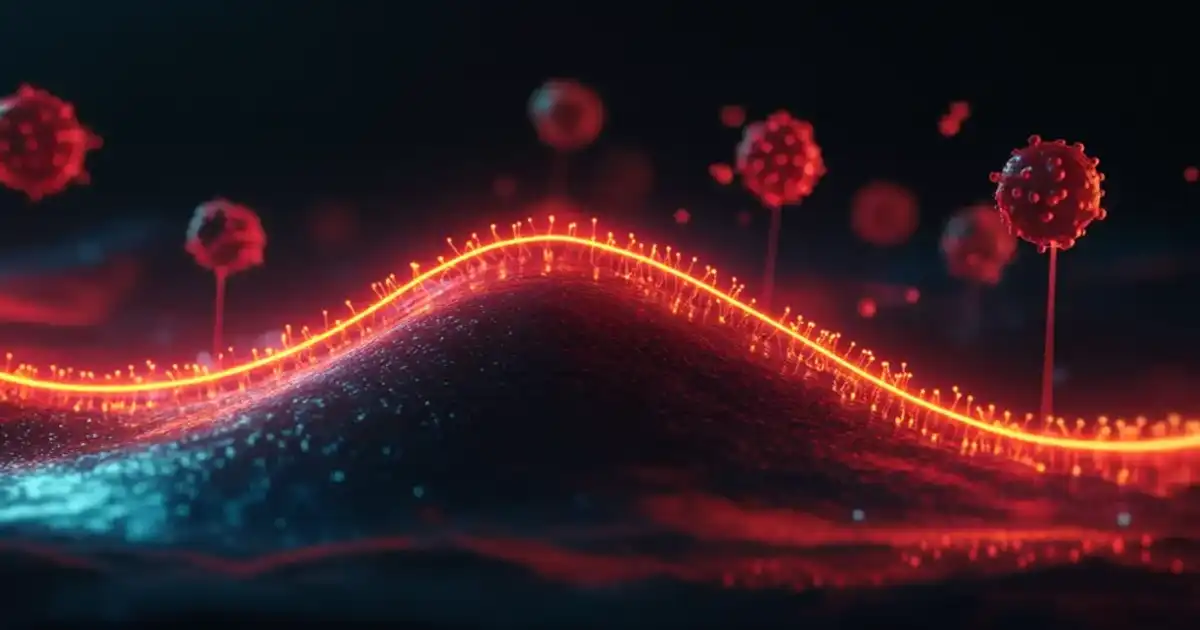
Reactive oxygen species (ROS) are highly reactive molecules produced by our cells. In excess, they can damage DNA or proteins. But in small amounts, they are essential: they act as chemical messengers that trigger beneficial reactions.
Light stimulates moderate production
When photobiomodulation is used, light activates the mitochondria. This triggers a small amount of ROS production. This stimulation is not dangerous: it acts as a gentle alarm that tells the cell, “Repair yourself, strengthen yourself, reactivate yourself.”

Result: improved cellular function
This well-balanced production makes it possible to:
- faster repairs,
- activation of protective genes,
- better protection against aging or inflammation.
Further Reading: The Biochemical Role of ROS
The Origin of ROS in Photobiomodulation
When mitochondria are activated by red or infrared light, an electron leak in the respiratory chain (complexes I through IV) generates:
- superoxide (O₂•⁻),
- hydrogen peroxide (H₂O₂),
- hydroxyl groups (•OH).
These ROS are produced in low doses, on a transient basis, and play a role in redox signaling.
Triggered cellular signaling
ROS play a key role in activating signaling pathways:
- Nrf2: stimulates antioxidantenzymes (SOD, catalase, glutathione),
- NF-κB: regulates inflammation,
- MAPK, PI3K/Akt: trigger cell repair, proliferation, and migration.
This is known as ROS-dependent signaling, triggered by light.
Biphasic Effect and Safety
- At low doses, ROS activate repair mechanisms.
- In excessive amounts, they can cause harmful oxidative stress.
👉 This is why it is important to adhere to the specified dose, fluence, frequency, and power settings in photobiomodulation.
Therapeutic Applications of Controlled ROS
- Tissue regeneration (skin, muscles, nerves)
- Gentle immune stimulation
- Reduction of Chronic Inflammation
- Prevention of Cellular Aging

Clinical protocols are designed to stimulate these effects without causing harmful oxidative stress.
LED Photobiomodulation and Management of Oxidative Stress
The LED light used in PBM allows for:
- precise control of the intensity,
- a uniform distribution of energy,
- a reduced risk of overstimulation compared to other, more focused sources (such as a poorly calibrated laser).
This is why the biphasic curve (too little = effective / too much = inhibition) fully applies to ROS.
Frequently Asked Questions
What are ROS in the context of photobiomodulation?
ROS (reactive oxygen species) are unstable molecules produced by cells, particularly in response to red or infrared light. At low doses, they play a beneficial role in cellular regulation, repair, and signaling.
Is ROS production beneficial or harmful?
It depends on the dose. At low concentrations, ROS stimulate protective and antioxidant mechanisms. In excess, they can cause oxidative stress and damage DNA, cell membranes, and proteins.
How does photobiomodulation modulate ROS?
PBM temporarily raises ROS levels, which activates the cell's natural antioxidant defenses. This process is beneficial if the dose is properly adjusted: this is the very principle behind the biphasic curve.
Scientific sources
- Huang YY, Chen AC, Carroll JD, Hamblin MR (2009). Biphasic dose response in low-level light therapy. Dose Response. PubMed · DOI
- Rhee SG (2006). H₂O₂, a necessary evil for cell signaling. Science. PubMed · DOI
- Hamblin, M. R. (2017). Mechanisms and applications of the anti-inflammatory effects of photobiomodulation. AIMS Biophys. PubMed · DOI
- de Freitas LF, Hamblin MR (2016). Proposed Mechanisms of Photobiomodulation or Low-Level Light Therapy. IEEE Journal of Selected Topics in Quantum Electronics. PubMed · DOI
See also
Our guides