Benefits of PBM
Published on
May 24, 2025
Photobiomodulation and sports: optimizing performance and recovery

In short: Adopted by both professional and amateur athletes, photobiomodulation acts as a natural catalyst for muscle recovery, thanks to the effects of red and infrared light on ATP production and oxidative stress. It reduces muscle soreness and the risk of injury, and improves sleep and energy levels. It is used before exercise to prepare the muscles and after exercise to aid recovery, at a rate of 3 to 5 sessions of 12 to 20 minutes per week.
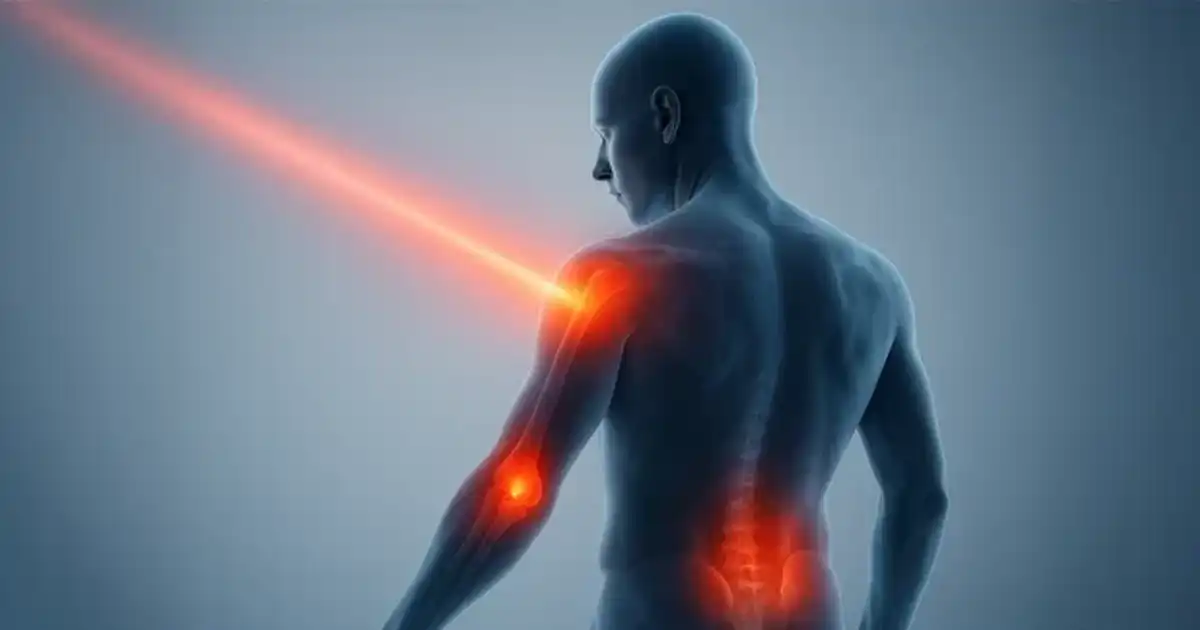
Photobiomodulation (PBM) is increasingly being used by elite athletes, professional sports teams, and amateur athletes. By stimulating cells with red and infrared light, it acts as a natural catalyst for muscle recovery, performance enhancement, and the reduction of post-workout pain.
Why include PBM in a sports training program?
- Faster muscle recovery (up to twice as fast)
- Reduction in muscle soreness and pain
- Reduced risk of injury (anti-inflammatory effect)
- Improved sleep and energy levels
- Regulation of exercise-induced oxidative stress
- Optimization of ATP production (the cell's energy source)

How do I use it?
- Before exercise: to prepare the muscles, improve flexibility and oxygenation
- After exercise: to flush out toxins, reduce soreness, and regenerate tissue
- Frequency: 3 to 5 sessions per week, depending on the training volume
- Duration: 12 to 20 minutes, depending on the area and the device's power
Recommended devices for athletes
- Large-format LED panels : for the back, legs, and torso
- Portable devices : for the knee, ankle, shoulder, and wrist
- Full-Body LED Cabins : for systemic recovery

Good to know
Staying hydrated, breathing deeply, and relaxing your muscles before and during the session increase the effectiveness of PBM.
For sports medicine professionals
- Interest in physical conditioning, rehabilitation, and pain management
- Shorter recovery times following injury
- Improving the training intensity-to-rest period ratio
- Non-invasive treatment without medication
Frequently Asked Questions
What are the concrete benefits for athletes?
Less pain, faster recovery, sustained performance, and a reduced risk of injury.
Can you use PBM right after exercise?
Yes, it's actually recommended. Post-workout PBM helps reduce inflammation and speed up the elimination of metabolic waste.
What is the ideal frequency for sessions?
During periods of intense training: 3 to 5 times a week. For maintenance or prevention: 2 to 3 times a week is sufficient.
Scientific sources cited
- Leal-Junior E.C. et al. (2015) – Effect of phototherapy (LLLT and LED) on exercise performance and markers of exercise recovery: a systematic review with meta-analysis – Lasers Med Sci. PubMed · DOI
→ Meta-analysis demonstrating the effects on post-exercise muscle recovery. - Ferraresi C., Hamblin M.R., Parizotto N.A. (2012) – Low-level laser (light) therapy (LLLT) on muscle tissue: performance, fatigue, and repair enhanced by the power of light – Photonics Lasers Med. PubMed · DOI
→ Confirms the preventive and energizing effects of light on muscle cells. - De Marchi T. et al. (2017) – Phototherapy for improvement of performance and exercise recovery: comparison of 3 commercially available devices – J Athl Train. PubMed · DOI
→ Shows a reduction in muscle soreness and markers of muscle damage following light exposure. - Zhevago N.A., Samoilova K.A. (2006) – Pro- and anti-inflammatory cytokine levels in human peripheral blood following transcutaneous and direct irradiation with polychromatic visible and infrared light – Photomed Laser Surg. PubMed · DOI
→ Examines the systemic effects of light on circulating inflammatory markers.
See also
Our guides