How does photobiomodulation reduce inflammation?
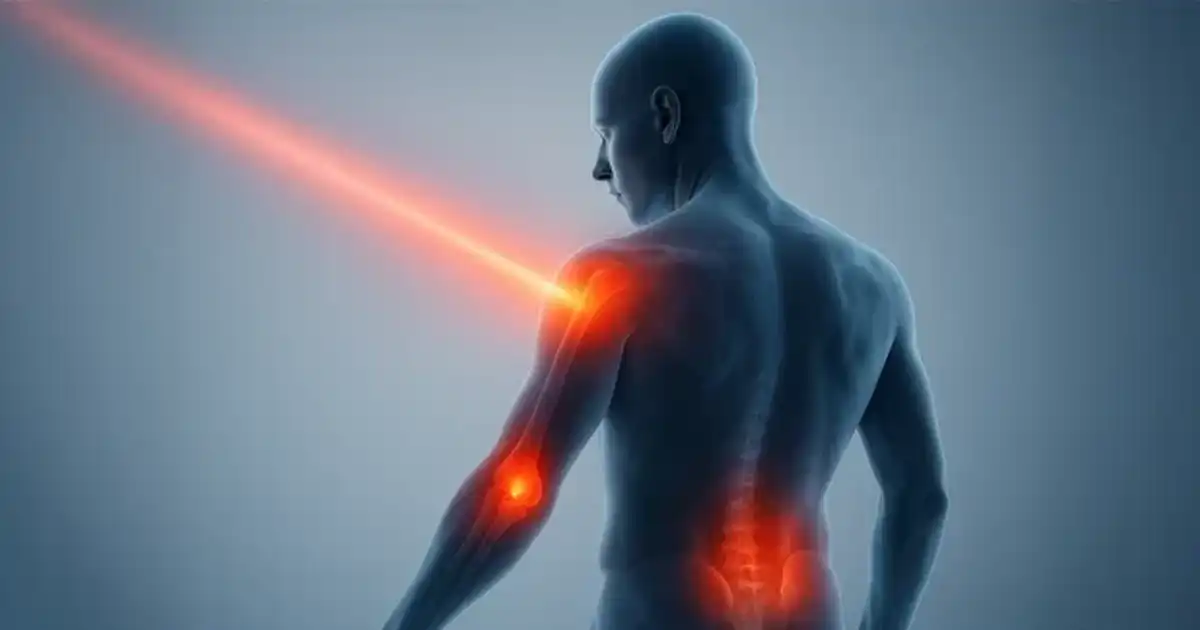
Photobiomodulation (PBM) uses red and near-infrared light to trigger a cascade of biological responses that reduce markers of inflammation. These effects are non-thermal, non-invasive, and supported by clinical research, and they help reduce pain.

Cellular anti-inflammatory mechanisms
PBM works through several scientifically established mechanisms:
- Reduction in pro-inflammatory cytokines such as TNF-α and IL-1β
- Release of nitric oxide (NO), which induces vasodilation and anti-inflammatory cellular signaling
- Activation of cytochrome c oxidase in mitochondria
- Stimulation of ATP production to accelerate tissue repair processes
👉 These effects have been extensively studied in the literature, notably in Hamblin MR, Proc. SPIE, 2006.
Types of inflammation targeted
Photobiomodulation is used to treat several types of inflammation:

Acute inflammation
- Sprains, tendonitis, muscle tears
- Post-traumatic redness or swelling
- Superficial burns or sunburn
Chronic inflammation
- Arthritis, rheumatoid arthritis
- Neuropathic pain or fibromyalgia
- Inflammation of the digestive tract or pelvic area (as a supplement)
These benefits have been confirmed by a systematic review of manual therapy in inflammatory conditions: Bjordal JM et al., Phys Ther Rev, 2006.
Clinical results observed
Tangible results are often seen as early as the first few sessions:
- Reduction of pain and swelling
- Improved joint mobility
- Decrease in CRP (C-reactive protein) levels
The effectiveness is further enhanced with regular use, as demonstrated by this study on chronic wounds: Enwemeka CS et al., Photomed Laser Surg, 2004.
Frequency and recommended protocol
Recommendations vary depending on the severity of the inflammation:
- 3 to 5 sessions per week during the acute phases
- 1 to 2 maintenance sessions per week
- Exposure time: 5 to 15 minutes per area
Recommended wavelengths
- 660 nm: superficial inflammation (skin, mucous membranes)
- 810 to 850 nm: deep inflammation (muscles, joints)
Safety and tolerance
Photobiomodulation is safe and well-tolerated, with no significant side effects when used properly. It does not interact with medications, making it suitable for use as a complement to conventional treatment.
For healthcare professionals
Why incorporate PBM into your practice?
- A natural alternative to nonsteroidal anti-inflammatory drugs (NSAIDs)
- Reduction in medication burden
- Faster post-operative recovery
- Long-lasting relief from chronic inflammatory pain
👉 Many practitioners report clinical success with photobiomodulation, particularly in cases of tendinitis and osteoarthritis.
Frequently Asked Questions
Is photobiomodulation really anti-inflammatory?
Yes. It reduces the production of pro-inflammatory cytokines, limits swelling, stimulates cell repair, and alleviates pain associated with inflammation.
What types of inflammation can it relieve?
Joint pain (osteoarthritis, knees, shoulders), tendonitis, chronic pain, skin inflammation (acne, redness), irritable bowel syndrome, post-surgical inflammation…
How many sessions does it take to see an improvement?
The effects often begin to be felt after 3 to 5 sessions, with maximum benefits typically seen after 8 to 12 sessions, depending on the condition.
Scientific sources cited
- Lim W. et al. (2007). Anti-inflammatory effects of low-level laser therapy.
Link to the study
→ Study on human cells showing a reduction in TNF-α, IL-6, and other inflammatory markers following exposure to red light. - Hamblin, M.R. (2017). Mechanisms and doses for photobiomodulation therapy.
Link to the study
→ Summarizes the dose-dependent effects on the reduction of acute and chronic inflammation. - Yu W. et al. (1997). PBM reduces inflammation in tendons and joints in animal models.
Link to the study
→ Confirms a reduction in edema, redness, and inflammatory infiltration following PBM.
See also
Our guides