Red light for athletic performance
Light to Enhance Athletic Performance: An Introduction to Photobiomodulation
Photobiomodulation (PBM), also known as low-level laser therapy (LLLT), is a technique that was discovered nearly 50 years ago. Despite its long history, it has not yet been widely accepted due to uncertainty surrounding its mechanisms of action at the molecular, cellular, and tissue levels.
However, in recent years, significant progress has been made in this field, particularly in the area of sports. This article is based on the study titled “Proposed Mechanisms of Photobiomodulation or Low-Level Light Therapy” by Lucas Freitas de Freitas and Michaël Hamblin.
What is photobiomodulation?
Photobiomodulation is a form of therapy that uses low-intensity light to stimulate, heal, regenerate, and protect tissues that have been injured, have degenerated, or are at risk of dying.
One of the main chromophores (the part of a molecule that absorbs light) involved in PBM is cytochrome c oxidase, a key enzyme in the mitochondrial respiratory chain.
How does photobiomodulation work?
Nitric Oxide Dissociation
The main hypothesis of the PBM is that photons of light can dissociate nitric oxide, which inhibits cytochrome c oxidase. This leads to an increase in electron transport, mitochondrial membrane potential, and the production of adenosine triphosphate (ATP), the main source of cellular energy.
Activation of light-sensitive ion channels
Another hypothesis involves the activation of light-sensitive ion channels. These channels can be activated by light, allowing calcium (Ca2+) to enter the cell. Calcium plays a crucial role in regulating various cellular functions, including muscle contraction, neurotransmitter release, and cell division.
Photobiomodulation and Sports
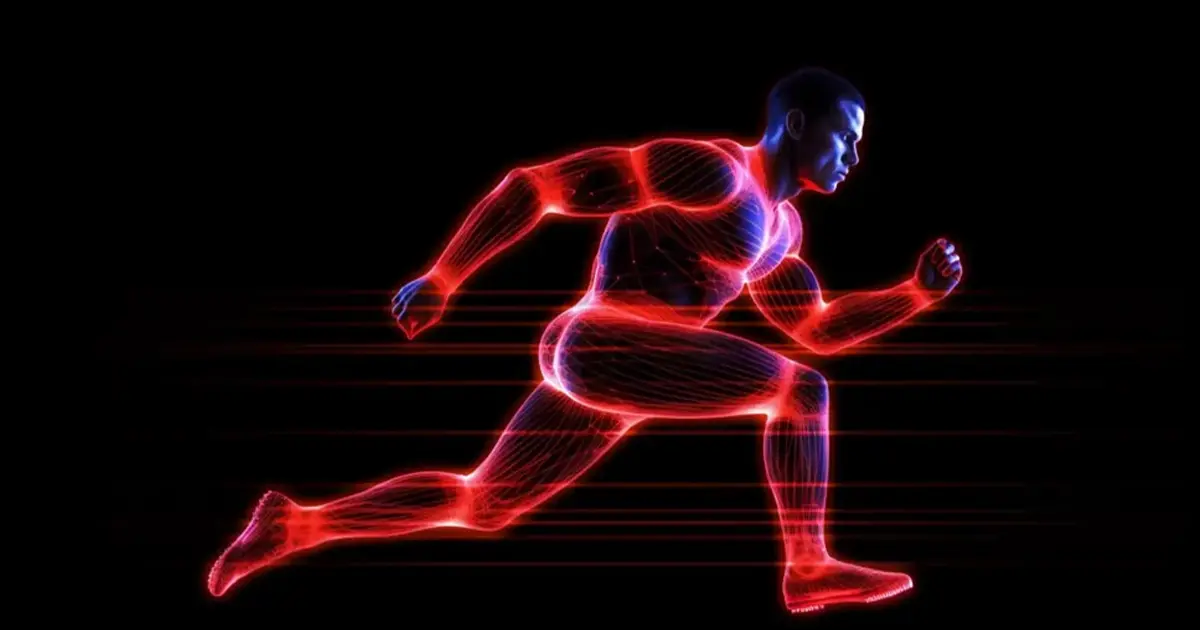
PBM has significant implications in the field of sports. It can help improve performance, speed up recovery after training, and prevent injuries. In addition, PBM can also increase protein production, promote cell migration and proliferation, and stimulate anti-inflammatory signaling and antioxidant enzymes.
Photobiomodulation is a promising technique that may have significant applications in the field of sports. Although more research is needed to fully understand its mechanisms of action, current evidence suggests that it may help improve athletic performance, speed up recovery, and prevent injuries. As such, PBM could become a valuable tool for athletes and coaches in the future.
References
Freitas L. F., Hamblin M. R. (2016). Proposed Mechanisms of Photobiomodulation or Low-Level Light Therapy. IEEE Journal of Selected Topics in Quantum Electronics, 22(3), 7000417.
See also
Our News
Similar articles, tips, and discoveries