Red light: a promising approach for depression

Photobiomodulation: An Innovative Approach to Treating Depression
Photobiomodulation (PBM) is an emerging method that uses light to improve mental well-being. This technique could offer a new approach to treating depression.
What is photobiomodulation?
PBM uses low-intensity light to stimulate cells. By targeting the mitochondria, it improves cellular energy production, reduces inflammation, and promotes cell regeneration.
Study on PBM and Depression
A comprehensive study titled "Review of Transcranial Photobiomodulation for Major Depressive Disorder: Targeting Brain Metabolism, Inflammation, Oxidative Stress, and Neurogenesis" was conducted by a team of researchers, including P. Cassano and Michael R. Hamblin. This research explores the use of photobiomodulation (PBM) to treat major depressive disorder (MDD).
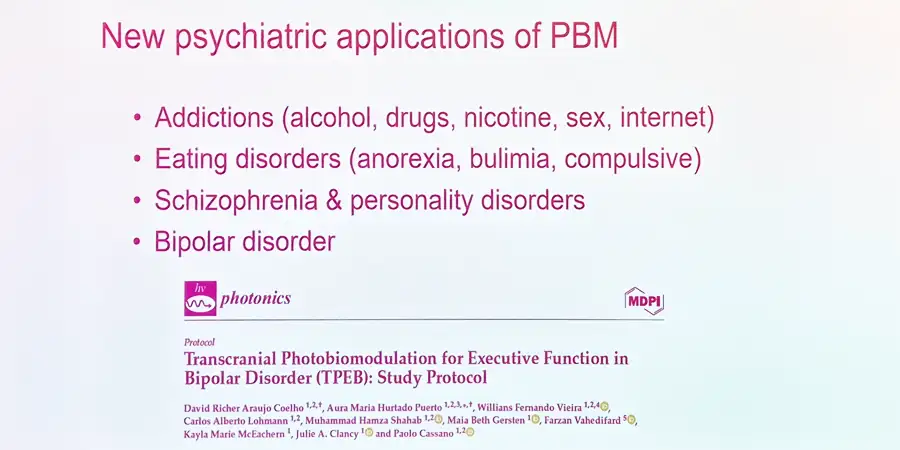
Study Methodology
The researchers used a systematic approach to examine the effects of red or near-infrared radiation on the brain. By focusing on clinical and preclinical studies, they sought to understand how PBM influences key biological processes such as brain metabolism, inflammation, oxidative stress, and neurogenesis.
PBM Targets
- Brain Metabolism: Improving Cellular Energy
- Inflammation: Reduction in Inflammatory Markers
- Oxidative Stress: Protection Against Cellular Damage
- Neurogenesis: Stimulation of Neuronal Growth
Benefits of photobiomodulation
- Noninvasive and well-tolerated
- No serious side effects
- Potentially scalable
Future Outlook
Although promising, PBM remains experimental as a treatment for depression. Larger clinical trials are needed to confirm its efficacy and safety.
Recommendations for Use
Consult a professional trained in PBM for a personalized assessment. This ensures appropriate and effective treatment.
References: Review of transcranial photobiomodulation for major depressive disorder: targeting brain metabolism, inflammation, oxidative stress, and neurogenesis.
Paolo Cassano, M.D., Samuel R. Petrie, Michael R. Hamblin, Theodore A. Henderson, M.D., Dan V. Iosifescu, M.D.
See also
Our News