Autism: Photobiomodulation Therapy and Neurofeedback
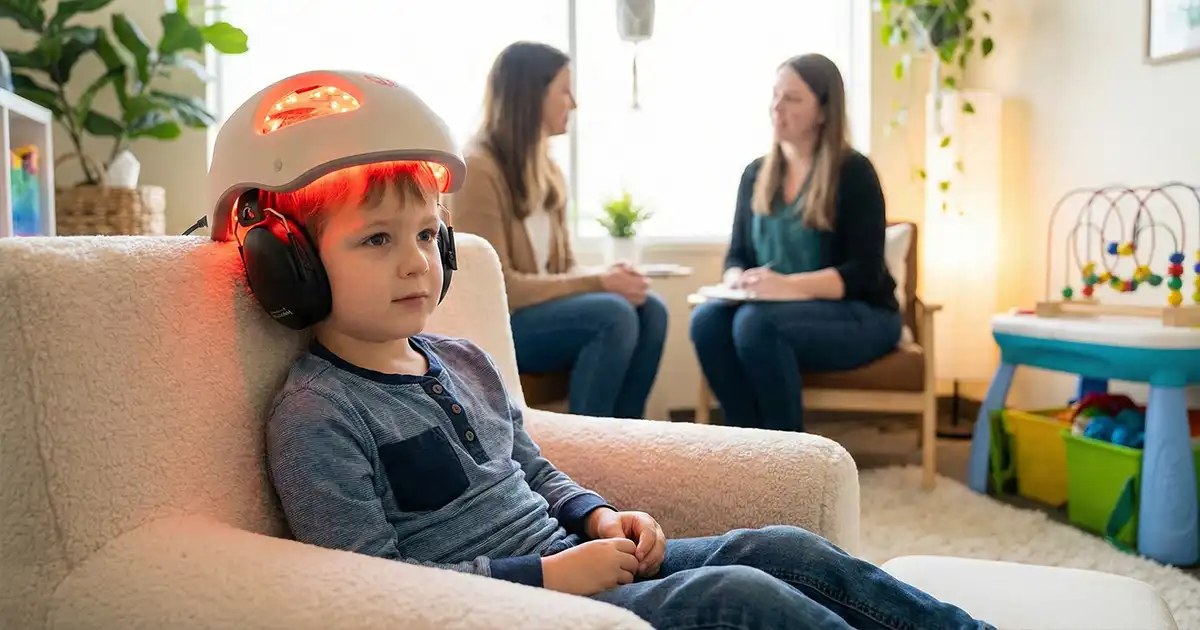
Photobiomodulation: A Promising Therapy for Treating Autism Spectrum Disorders and Neurological Diseases
Photobiomodulation (PBM), also known as light therapy or low-level laser therapy, is gaining increasing attention in the field of neuroscience. It represents a new, non-invasive therapeutic approach for treating neurological disorders, including autism spectrum disorders, Alzheimer’s disease, and other neurodegenerative diseases. Combined with techniques such as neurofeedback, this method uses low-intensity LEDs or lasers to stimulate brain cells. This article will explain in detail why photobiomodulation is now considered a revolutionary breakthrough in brain therapy and why Weber Medical presents this technology as an innovative solution.
What is photobiomodulation, and how does it work?
Photobiomodulation (PBM) is a non-invasive therapy based on the application of low-intensity light (often infrared) to biological tissues. This process uses either LEDs or a low-energy laser to stimulate cellular and neurological functions. The mechanism relies in particular on the absorption of light by a key enzyme, cytochrome c oxidase, found in the mitochondria.
Light stimulates this enzyme, which helps improve mitochondrial function, increase ATP production ( cellular energy), promote wound healing, and reduce neuroinflammation and oxidative stress. This process has beneficial effects on brain cells and improves brain function.
Photobiomodulation and autism: what is the connection?
An increasing number of studies are exploring the potential of PBM for treating autism spectrum disorders. Autism is associated with abnormalities in brain development, neurological abnormalities, and cognitive impairments. Laser therapy may be able to correct some of these abnormalities.
In children with autism spectrum disorders, imbalances are often observed in the prefrontal cortex, which is involved in working memory, planning, and the processing of sensory information. Photobiomodulation, by reducing neuroinflammation, could help improve brain and sensory functions. Animal models have, in fact, shown significant improvement following exposure to targeted light waves.
Can autism spectrum disorders be treated with PBM?
Children with autism spectrum disorders may benefit from pulsed light therapy. In treating autism spectrum disorders, PBM aims to modulate abnormal neural activity, stimulate brain plasticity, and improve the processing of sensory information.
A growing number of clinical trials show that exposure to certain light waves reduces repetitive behaviors, improves communication, and reduces anxiety. Although this research is still in its early stages, the results are promising.
💡 What the Vielight experiment shows Vielight
Protocols using the Vielight Gamma (40 Hz) have shown positive effects on sensory hypersensitivity, attention disorders, and nonverbal communication. This device uses transcranial stimulation combined with intranasal light to target deep neural networks.
Vielight Duo 4
Transcranial and intranasal stimulation at 40 Hz
✔️ Reduction in the severity of autism
✔️ Improved attention and sleep
✔️ Reduction in parental stress and behavioral rigidity
👉 Order it now on Bioledtherapy
Key results observed after 6 months of treatment:
The Vielight clinical study Vielight that:
These clinical benefits have not only improved the children’s quality of life, but also that of their families and caregivers, by creating a more peaceful environment conducive to development.
What are the effects of photobiomodulation on brain development?
Brain development, particularly during childhood, is a critical process. Abnormalities in this development may be responsible for disorders such as autism or major depressive disorder. The use of photobiomodulation could help restore neural balance in at-risk individuals.
By stimulating growth factors, light promotes cell regeneration, strengthens mitochondrial membrane function, and enhances brain plasticity. This helps support the neurological processes underlying learning, memory, and emotional regulation.
How does low-level laser therapy stimulate brain cells?
The low-level laser penetrates the skull painlessly and targets areas of the brain affected by neurological disorders. The pulsed light waves activate the mitochondria in brain cells, which increases energy production and reduces the activity of inflammatory cytokines.
This treatment also triggers local therapeutic responses, such as the regulation of cellular metabolism or the reduction of inflammation. Field trials show that this light therapy could be beneficial in several cases, with no major side effects reported to date.
Can photobiomodulation improve cognitive function?
Yes, PBM can improve cognitive function in patients with neurological disorders or who have suffered a brain injury. By stimulating the prefrontal cortex, this therapy enhances the brain’s ability to concentrate, remember, and make decisions.
Ongoing studies indicate a positive impact on working memory, attention, and initiative in both adults and children. These improvements are attributed to the regulation of neuronal proteins and improved neural connectivity between the brain regions involved in cognition.
Photobiomodulation and Neurofeedback: A Promising Synergy?
Neurofeedback, which relies on real-time monitoring of brain activity via EEG, can be combined with photobiomodulation to enhance therapeutic benefits. This synergy could treat behavioral disorders more effectively by providing both conscious feedback to the user and deep cellular stimulation.
Neuroscience is increasingly exploring this synergy. While neurofeedback helps train the brain to function more effectively, PBM works at the cellular and mitochondrial levels to reinforce the long-term effects.
What are the clinical results and side effects?
Early clinical studies show very encouraging results, particularly in terms of reduced neuroinflammation, improved cognitive markers, and a better quality of life following treatment. Patients also report increased energy, a more stable mood, and better sleep.
As for side effects, they are rare and generally mild. Mild fatigue or temporary sensitivity to light may occasionally occur. Photobiomodulation, as a non-invasive method, appears to be very well tolerated.
Photobiomodulation for Alzheimer's: Hope for Patients?
Alzheimer's disease, one of the most feared neurodegenerative diseases, may be slowed down through photobiomodulation. Studies show improved cognitive function and a reduction in amyloid plaques following exposure to low-energy lasers.
By improving mitochondrial respiration and reducing oxidative stress, light activates the brain’s protective mechanisms. This could help patients maintain their cognitive abilities for longer and slow the progression of the disease.
What does the future hold for photobiomodulation in neuroscience?
As light therapy technologies continue to evolve, the scope of photobiomodulation is expanding rapidly. From simple wound healing to regulating brain function, this therapy represents a major breakthrough in the treatment of neurological disorders.
Weber Medical now offers innovative devices that enable personalized use of PBM, tailored to patients' specific needs. The integration of this method into traditional clinical protocols could revolutionize 21st-century medicine.
Key takeaways
- Photobiomodulation uses low-energy LEDs or lasers to stimulate brain cells.
- It shows promise for treating autism spectrum disorders, Alzheimer's disease, and other neurodegenerative diseases.
- It acts on the mitochondria, reducing neuroinflammation and oxidative stress.
- The therapy is non-invasive, well-tolerated, and has no serious side effects.
- It can be combined with neurofeedback for a more comprehensive approach.
- Clinical trials suggest improvements in brain development and cognitive function.
- Numerous studies are currently underway to further explore its applications.
The Vielight Duo 4 device used in the clinical study is now available!
See also
- Mitochondria and Mood Disorders
- PBM and the Treatment of Depression
- PBM and Music Care Music Therapy
- Photobiomodulation and chemotherapy: the study that restores memory
Scientific sources
- Hamblin (2022). Could Photobiomodulation Treat Autism Spectrum Disorder? Photobiomodul Photomed Laser Surg. Read on PubMed
- Leisman et al. (2018). Effects of Low-Level Laser Therapy in Autism Spectrum Disorder. Adv Exp Med Biol. Read on PubMed
Our News