CBS News: A Dermatologist Explains Red Light Therapy
The Red Light on the Morning TV Show
When a major American network devotes a segment of its morning show to a skincare treatment, it means the topic has moved from doctors’ offices into people’s bathrooms. On February 3, 2025, CBS News published an article by Sara Moniuszko accompanied by a video report from “CBS Mornings Plus” on red light therapy—also known as LED therapy—and its anti-aging benefits.
Our guest is Rachel Nazarian, a board-certified dermatologist in New York. Her remarks are brief and free of jargon, and we felt they were insightful enough to warrant careful reading. In just a few minutes, she explains what photobiomodulation is when applied to the skin—and, above all, what distinguishes a device that actually works from a mere decorative object.
Table of Contents
- Why an LED, and why red?
- Collagen, wrinkles, pores: What the dermatologist says
- What the red light Cannot Replace
- Choosing a Device: CBS Criteria
- Frequently Asked Questions
- Key Takeaways
Why an LED, and why red?
Rachel Nazarian begins with physics. Light-emitting diodes produce a narrow wavelength band, and it is this narrowness that allows them to penetrate deepest into the tissue. Hence, according to her, their potential for skin care. This point is consistent with what we’ve been explaining for a long time: wavelength isn’t just a marketing gimmick—it’s what determines the depth of action.
CBS notes that the practice has become widespread on social media, where users film their portable devices and face masks as part of their daily routines. This is the context of the article, and it’s also what makes it necessary: when everyone is talking about it, someone has to go back to the basics.
Collagen, wrinkles, pores: What the dermatologist says
The dermatologist doesn't mince words: in her view, there's no doubt that red light can be very beneficial for the skin. She acknowledges that there are many studies, while noting that additional, more standardized research is still needed. We appreciate this balanced statement because it strikes just the right tone: confident, but not blind.
As for how it works, the image speaks for itself. Light stimulates cells to produce energy, and what does the body do with that energy? It cleanses itself. The result: more collagen, shallower wrinkles, and pores that may appear smaller. For more information, our page on the benefits of photobiomodulation for the skin details what the research shows about each of these points.
What the red light Cannot Replace
This is a passage we’d like to quote verbatim, because it stands in stark contrast to what many salespeople say. According to Rachel Nazarian, the red light doesn’t mean giving up Botox, injections, or in-office laser treatments. Those are separate procedures performed by a doctor. The benefit of red LEDs lies elsewhere: they can be used at home, safely for most people.
In other words, red light therapy does not compete with cosmetic dermatology. It complements it, on a different level and at a different pace. We share this view.
Choosing a Device: CBS Criteria
The dermatologist acknowledges that it is difficult to determine the exact effectiveness of devices sold to the public because they are not standardized: the power, the number of diodes, and the distance from the skin vary from one model to another. Her advice is to look for the “FDA-cleared” label and a device that operates within the low-energy red spectrum.
She is cautious about the use of infrared in household devices—often associated with the color red—because it can generate heat, and heat is not suitable for all skin types: redness, burns, and swelling are possible with higher-energy models. On this point, we would like to qualify our stance. Near-infrared light is used in medical devices to reach deeper tissues, and its benefits are well-documented; the real issue is controlling the dose and heat dissipation—something a professional-grade device manages effectively, whereas a cheap mask does not always do so.
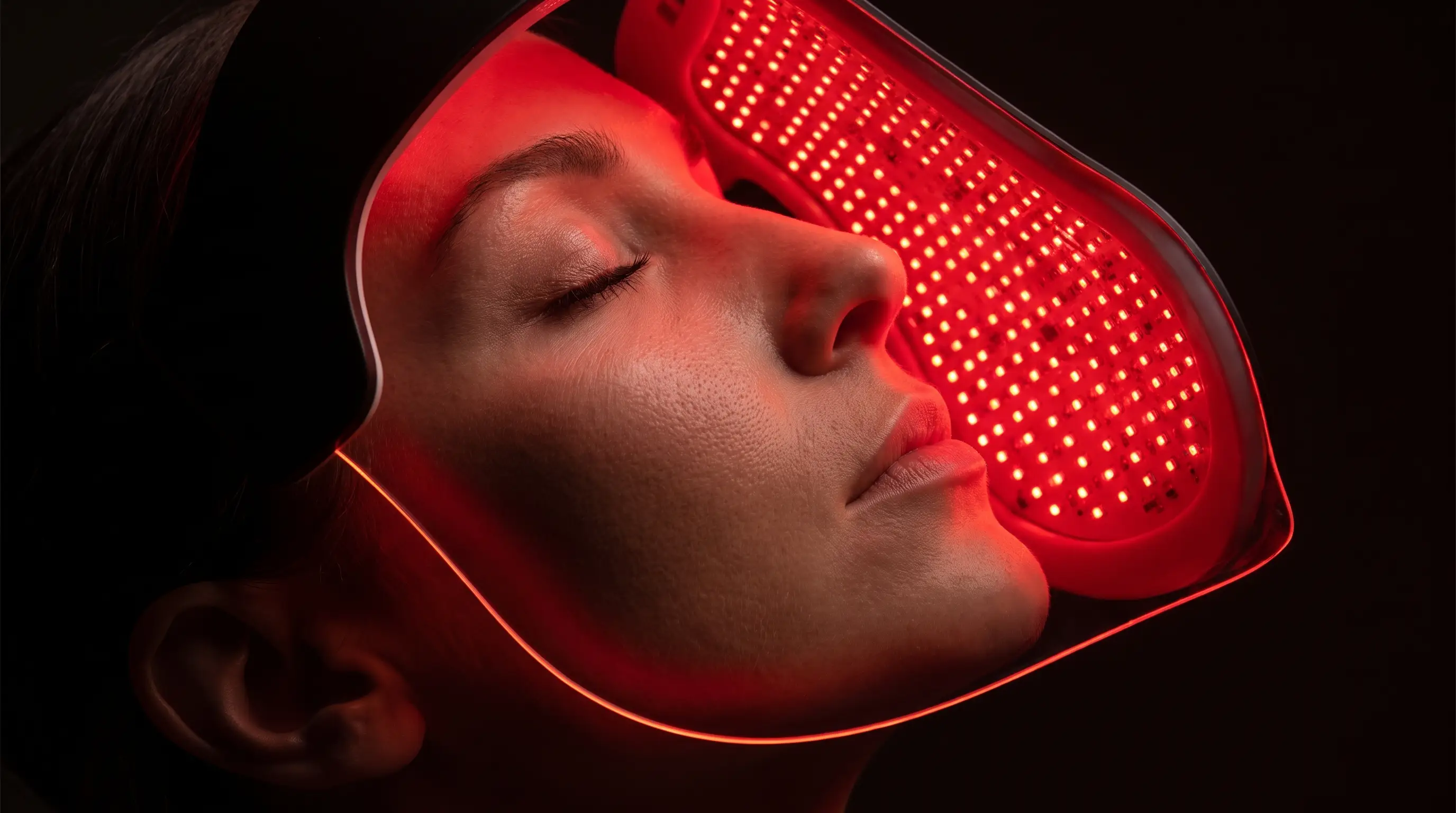
One last tip, and by no means the least: your eyes. These devices do not use UV light, but bright light is not good for your eyes. Choose a mask with cutouts around the eyes, or one that comes with goggles. And unless you have a rare and specific eye condition, these low-energy devices are considered safe for all skin types. Please refer to our guide for choosing a photobiomodulation device based on your intended use.
Frequently Asked Questions
Does red light really reduce wrinkles?
According to dermatologist Rachel Nazarian, who was interviewed by CBS News on February 3, 2025, red light stimulates cellular energy production, which promotes collagen production, reduces the depth of wrinkles, and may reduce the apparent size of pores. She notes that more standardized studies are still needed and that this treatment is not a substitute for in-office procedures.
Which red light device should you choose for your home?
CBS highlights two criteria: the "FDA cleared" designation and a device that operates within the low-energy red spectrum. Models that combine high-energy infrared light can cause skin to heat up and may irritate certain skin types. Eye protection (face shields or goggles) is recommended.
Is red light therapy safe?
According to Rachel Nazarian, low-energy devices are generally safe for all skin types, except in rare cases of eye conditions. They do not emit UV rays. Precautions should be taken regarding the eyes and the heat generated by high-energy infrared models.
Key Takeaways
A three-minute television segment is no substitute for a literature review, but this one gets to the heart of the matter without distorting it: red light affects the skin; it complements rather than replaces other treatments; and the quality of the device is what matters most. When a New York dermatologist says on television that it’s hard to know how effective consumer devices are, she’s describing a market without standards. That is precisely what distinguishes a well-documented medical device from a gadget.
The article and video are freely available on cbsnews.com.
Source: Sara Moniuszko, “What is red light therapy? A dermatologist explains the skin care trend and its benefits,” CBS News, February 3, 2025. This article is a summary; it does not constitute medical advice. Photobiomodulation is not a substitute for prescribed treatment. Consult a healthcare professional.
See also
Our News
Similar articles, tips, and discoveries