Photobiomodulation: Definition and Principles

What is photobiomodulation (PBM)?
Photobiomodulation is a non-invasive method that uses red or near-infrared light to stimulate the body’s cells. It is also known as low-intensity phototherapy, red light therapy, or LLLT (Low-Level Light Therapy). It exposes tissues to specific wavelengths in the visible and near-infrared spectrum without heating or damaging them. Painless, it is used for both wellness and as a complementary medical treatment.
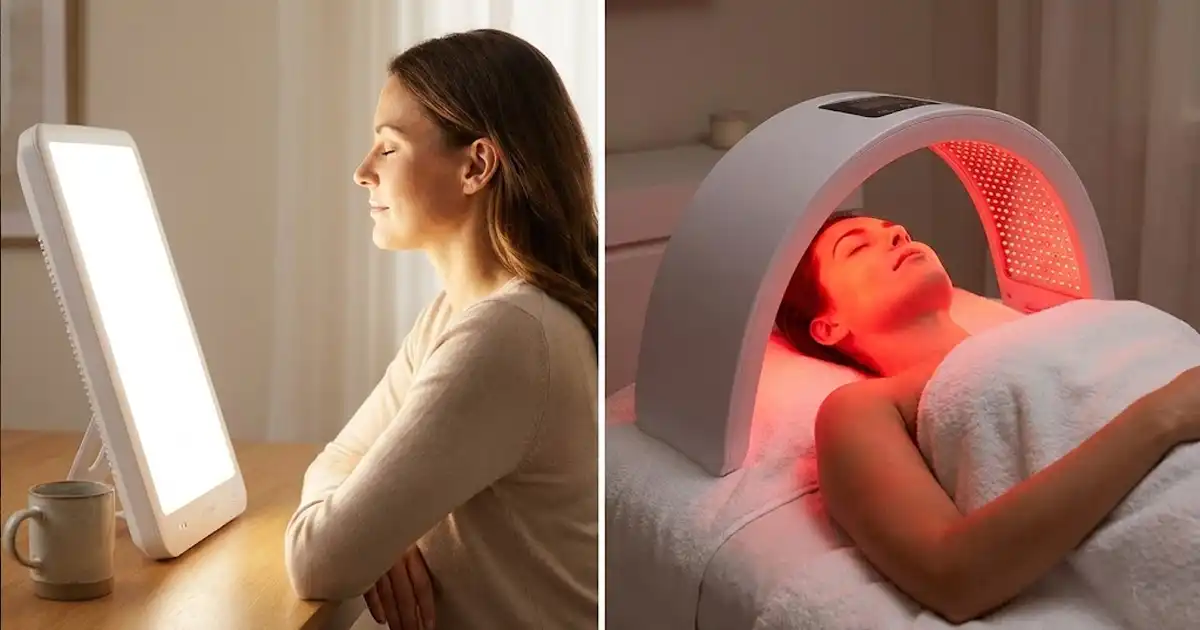
Not to be confused with light therapy: see “Photobiomodulation or Light Therapy?”
How Does Photobiomodulation Work? The Principle
The principle is similar to photosynthesis: light energy is absorbed by the mitochondria, specifically by the enzyme cytochrome c oxidase. This activation increases the productionof ATP, the cell’s energy source, which promotes tissue regeneration, microcirculation, and a reduction in inflammation.
For more details: cellular mechanisms of PBM · the role of ATP · mitochondria.
LED or laser?
PBM can be delivered using LEDs (diffuse, safe light, suitable for large areas) or low-intensity lasers (coherent light, deeper penetration, often used in medical applications). Details on applications: laser photobiomodulation.
What is photobiomodulation used for?
It has a wide range of uses—each of which is covered in a dedicated guide:
- All the benefits · skin
- Pain and inflammation
- Sports and Recovery
- Sleep, Brain, Immunity, Hair Regrowth
For medical applications and clinical evidence (dermatology, oncology, neurology): photobiomodulation in medicine.
Is it safe?
PBM is noninvasive, UV-free, and well tolerated: side effects are rare and mild (redness, temporary sensation of warmth). There are contraindications that must be observed.
In detail: Is it dangerous? · Contraindications · Side effects.
What happens during a session?
A session typically lasts 15 to 30 minutes, focusing on the area to be treated at the appropriate wavelength. Consistency is more important than duration. See the procedure, duration, and ideal frequency of sessions.
Frequently Asked Questions
What is photobiomodulation?
This is a form of light therapy (red and near-infrared) that stimulates cellular activity without UV rays or damaging heat. It is also known as PBM, red light therapy, or LLLT.
Is photobiomodulation scientifically validated?
Yes. Hundreds of studies document its biological effects, particularly on mitochondria, ATP production, and the regulation of inflammation.
Photobiomodulation and light therapy—are they the same thing?
No: Light therapy affects the circadian rhythm through the eyes; photobiomodulation acts directly on the exposed tissues.
Scientific sources
- Chung H, Dai T, Sharma SK, Huang YY, Carroll JD, Hamblin MR (2012). The nuts and bolts of low-level laser (light) therapy. Ann Biomed Eng. PubMed · DOI
- de Freitas LF, Hamblin MR (2016). Proposed Mechanisms of Photobiomodulation or Low-Level Light Therapy. IEEE Journal of Selected Topics in Quantum Electronics. PubMed · DOI
- Anders JJ, Lanzafame RJ, Arany PR (2015). Low-level light/laser therapy versus photobiomodulation therapy. Photomed Laser Surg. PubMed · DOI
- Robijns J, Nair RG, … Bensadoun RJ (2022). Photobiomodulation therapy in the management of cancer therapy-induced side effects: WALT position paper 2022. Front Oncol. PubMed · DOI
See also
Our guides