How PBM Works
Published on
May 8, 2025

Understanding the biphasic curve in photobiomodulation
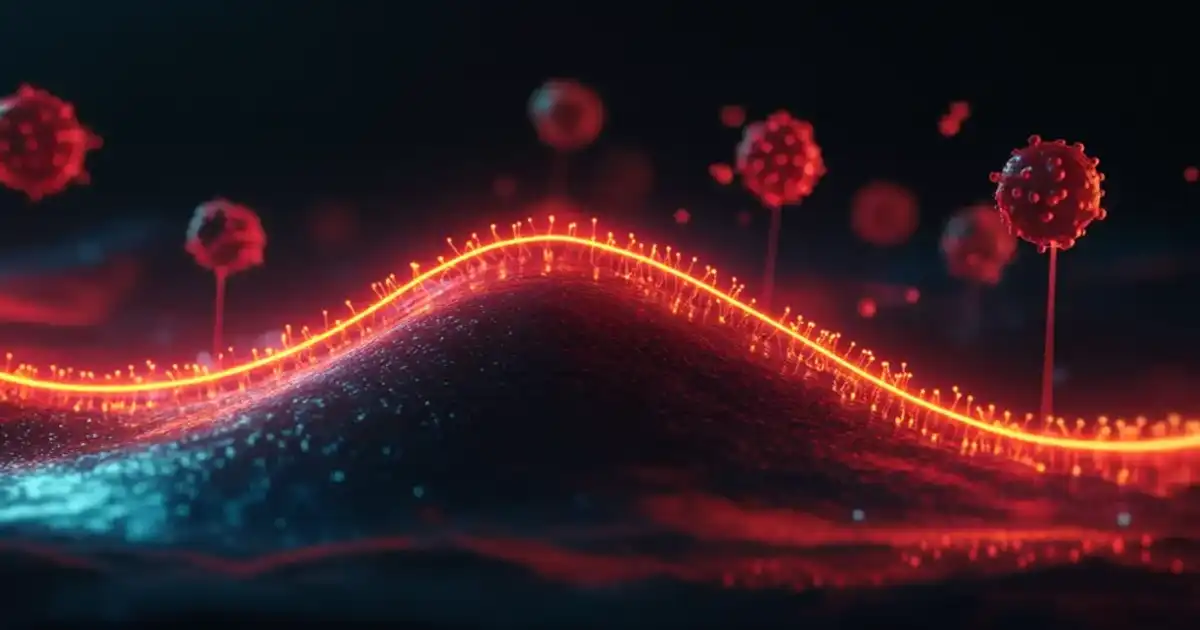
biphasic curve photobiomodulation (PBM)

Share this article:

When "more" doesn't mean "better"

Photobiomodulation is based on the idea that light stimulates cells. But be careful: too much light can have the opposite effect. This is known as the biphasic curve.

What is a biphasic curve?

It is a two-step process:

  • At low doses, light stimulates the cell.
  • At high doses, it slows down or blocks the effect.

This means you need to find the right intensity to achieve optimal results.

Arndt-Schultz curve photobiomodulation

Why is this important?

This principle explains why a PBM protocol must be properly regulated:

  • if the dose is too low, nothing happens;
  • If it is too strong, the effect can be counterproductive.

By following the biphasic curve, we maximize the effects on:
✅ pain, ✅ healing, ✅ cell regeneration.

Dosimetry Calculation

Power density
50 mW/cm²
1200
Duration of the session
5:00
30 seconds30 min

Results

Energy density
15J/cm²
Optimal
04 J/cm²20 J/cm²30+
Recommended time
3:20
per 10 J/cm²
The optimal dose for most photobiomodulation applications ranges from 4 to 20 J/cm². Adjust the settings according to your specific needs.

Our guides

Our guides to help you explore light therapy

All guides
Differences Between Red Light and Near-Infrared Photobiomodulation
How PBM Works
Differences Between Red Light and Near-Infrared Light in Photobiomodulation
Red light or near-infrared light in photobiomodulation?
Read the article
mitochondria, photobiomodulation, phototherapy, light therapy
How PBM Works
Mitochondria: Understanding Their Vital Role in Cellular Energy and Health
Mitochondria: the powerhouses of our cells
Read the article
The role of ATP in photobiomodulation
How PBM Works
The Role of ATP in Photobiomodulation
Learn how photobiomodulation increases ATP production in cells to promote energy, regeneration, and recovery.
Read the article
ros mitochondria photobiomodulation
How PBM Works
Photobiomodulation and reactive oxygen species (ROS)
Explore the role of ROS in photobiomodulation: striking a balance between beneficial signaling and oxidative stress to be avoided.
Read the article
cytochrome c oxidase photobiomodulation
How PBM Works
Cytochrome c oxidase in photobiomodulation
Understand how light affects cytochrome c oxidase, a key enzyme in cellular metabolism that is activated during photobiomodulation sessions.
Read the article
Photobiomodulation: Cellular Mechanisms
How PBM Works
cellular-mechanisms-of-photobiomodulation
Discover the cellular mechanisms stimulated by photobiomodulation: effects on mitochondria, ATP, and intracellular messengers.
Read the article
Photobiomodulation and Nitric Oxide (NO)
How PBM Works
Photobiomodulation and Nitric Oxide (NO)
NO plays a key role in photobiomodulation: circulation, inflammation, and signaling. Find out how light modulates it.
Read the article