Mester E. et al. - Laser-Induced Wound Healing: A Hungarian Article from 1972
Published in 1972 in an English-language Hungarian surgical journal, this article is commonly cited as the point at which the Budapest team’s work shifted toward human clinical cases. PubMed does not provide an abstract for this article; this entry describes its historical significance but does not attribute any specific findings to it.
The Context of the Time
In the early 1970s, the open-air track in Budapest had been in existence for a few years. Contemporary journals recount its origins: in 1967, Endre Mester sought to determine whether the ruby laser caused cancer in mice. He observed no cancer, but he did note faster regrowth of shaved fur in the exposed animals and accelerated wound healing. This starting point is now considered the foundation of photobiomodulation.
The logical next step was to move away from the animal model—a shift that the literature reviews associate with this period and to which this text is frequently cited as an example. However, it is important to bear in mind the editorial conventions of the time: PubMed published virtually no abstracts prior to 1975.
What This Publication Is About
Here are all the verifiable details from the brochure.
- Exact title as indexed: Stimulation of wound healing by laser rays.
- Journal: *Acta Chirurgica Academiae Scientiarum Hungaricae*, abbreviated as *Acta Chir Acad Sci Hung*, volume 13, issue 3, pages 315–324.
- Year of publication: 1972. No month or day is listed in the record.
- Authors: Mester E, Szende B, Spiry T, Scher A.
- Language of publication: English. No DOI is associated with this record.
- MeSH Index Terms: Adult, Female, Humans, Laser Therapy, Leg Injuries, Leg Ulcer, Male, Melanoma, Middle-Aged, Skin Neoplasms, Wound Healing.
This indexing differs markedly from that of previous articles: animal-related terms have been replaced by human descriptors, including adult and middle-aged age groups, conditions such as leg wounds and leg ulcers, and the descriptor “laser therapy.” These elements describe the scope of the study, not what was measured or found.
What We Know Today About the Mechanism
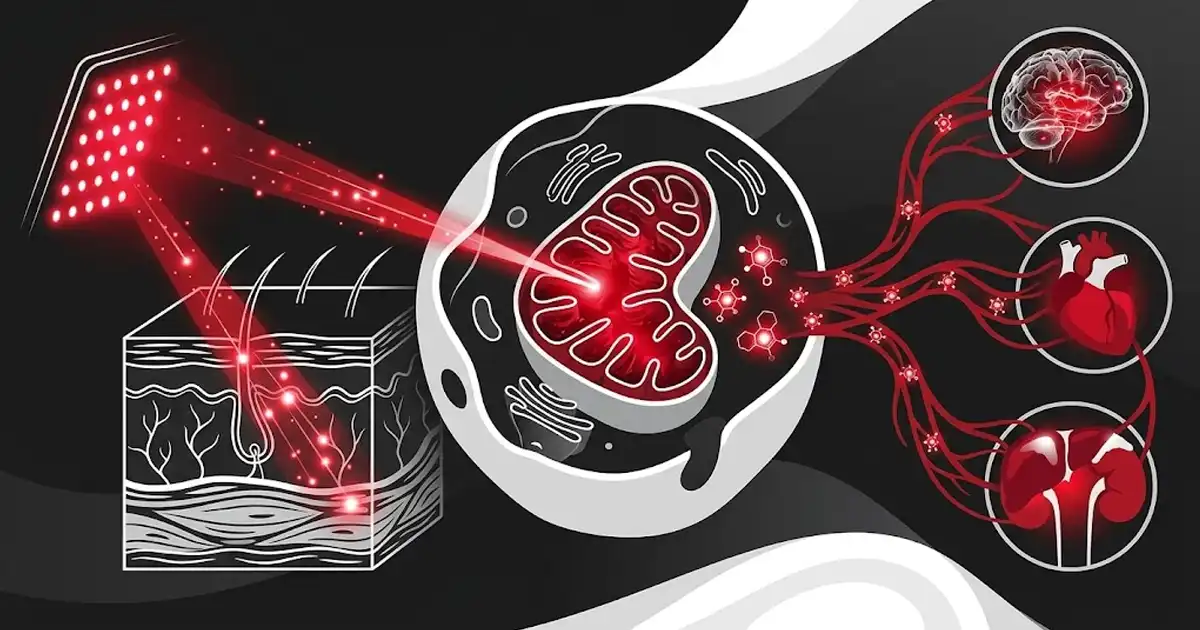
The explanatory frameworks available today were developed well after this text was written. The most widely studied framework is based on the absorption of red and near-infrared light by mitochondrial cytochrome c oxidase, with the presumed consequence being a signaling pathway involving reactive oxygen species and calcium.
When applied to chronic wounds, this framework is used to discuss angiogenesis, fibroblast activity, and the regulation of inflammation. These discussions are part of contemporary research and cannot be retroactively applied to a 1972 article whose content is not available here.
What This Fact Sheet Cannot Tell You
Let’s be frank. PubMed does not provide an abstract for this article, so no specific data can be reported here. We do not know the number of patients involved, the exact nature of the lesions treated, the wavelength and dose used, the number and spacing of the sessions, the duration of follow-up, or the extent of the changes described.
Nor can we confirm the existence of a control group or describe the evaluation criteria used. Clinical practices in the early 1970s do not meet current standards for randomization, blinding, and statistical analysis. The presence of human descriptors in the indexing does not in any way constitute evidence of clinical efficacy.
Its place in the history of photobiomodulation
This text is frequently cited as evidence of the Hungarian team’s transition from the laboratory to clinical practice. Its significance lies in its role as a chronological and documentary reference point, not as an argument. Current recommendations and assessments regarding wounds are based on much more recent trials, with published protocols and reproducible parameters.
Frequently Asked Questions
Does this article pertain to patients?
The search terms are human- and clinical-based, which can be verified. However, without an accessible abstract, it is impossible to specify how many people were involved or how they were followed up.
Why do some descriptors mention skin tumors?
The terms “melanoma” and “skin tumors” appear in the index, indicating that the topic is discussed in the text. Their mere presence does not imply usage, effect, or conclusion.
Why does the date shown say January 1, 1972?
Only the year is listed in the record. January 1 is a display convention specific to this record and not the actual publication date.
Reference
Mester E, Szende B, Spiry T, Scher A. Stimulation of wound healing by laser rays. Acta Chir Acad Sci Hung, 1972, 13(3), 315-24. PMID 4659882. View the record on PubMed
This summary is provided for informational purposes only and does not constitute medical advice. Photobiomodulation is not a substitute for prescribed treatment. Consult a healthcare professional.