Zhang N. et al. - Red Light Combined with Optical Devices for Myopia Control: A Meta-Analysis
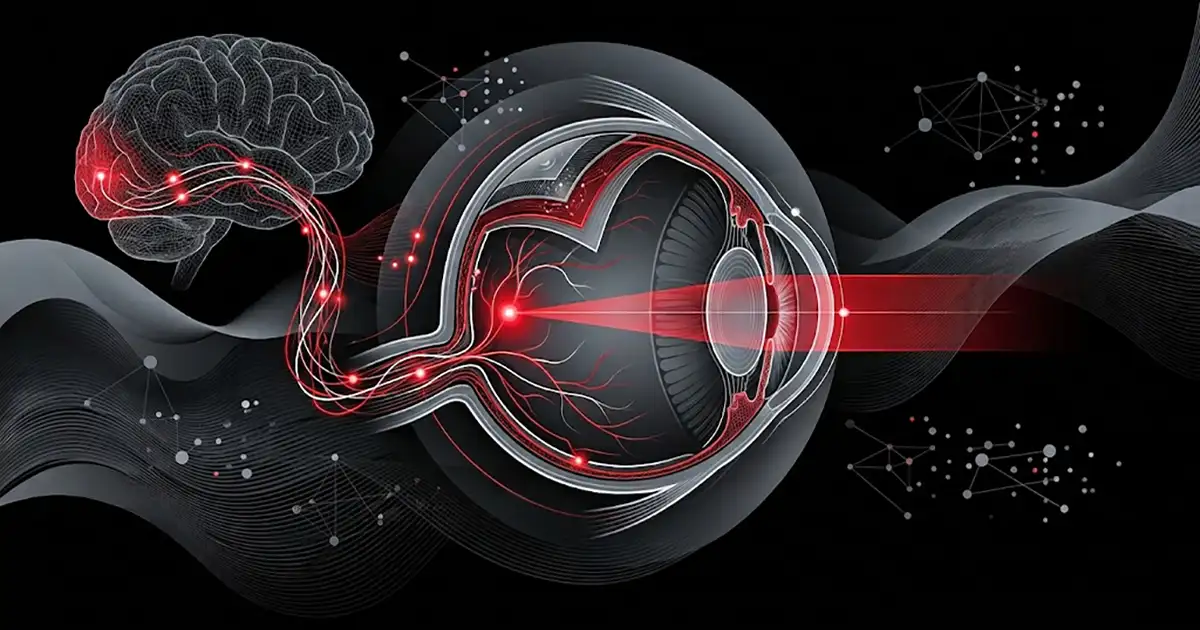
This meta-analysis reports that the addition of repeated low-intensity red light to an optical device for myopia control is associated with less axial lengthening and a thicker choroid in children. The authors present these observations as early biological markers, not as evidence of long-term superiority.
What this study measured
The study focuses on a combination of treatments: repeated low-intensity red light delivered by a specialized ophthalmic device, in addition to an existing optical intervention. The two optical interventions studied are orthokeratology—rigid lenses worn at night—and multifocal segmented lenses with peripheral defocus. The comparator is optical monotherapy.
The search covered six databases up to July 14, 2025. Randomized and cohort studies were included. The primary outcomes were axial length, spherical equivalent, and subfoveal choroidal thickness, with an assessment of risk of bias using ROB2 and ROBINS-I. Eight studies were included. The abstract does not specify either the total number of participants or the PROSPERO registration number.
Key Findings
The association is consistent across all three structural criteria, but the abstract does not report either mean differences or confidence intervals.
- Eight included studies—randomized and cohort studies—with the search completed on July 14, 2025.
- Reduced axial elongation with combination therapy; no specific values are provided in the abstract.
- Slower progression of the refractive spherical equivalent; no specific value is given in the abstract.
- A more pronounced increase in subfoveal choroidal thickness.
- Structural changes were observed as early as 1 month and persisted for up to 12 months.
- No significant differences were observed in short-term ocular surface adverse events.
The absence of effect sizes in the abstract is a limitation in itself: it makes it impossible to quantify the additional benefit.
How photobiomodulation works for this indication
The proposed mechanism involves the choroid, a vascular layer located beneath the retina. The observed choroidal thickening is thought to be a marker of a change in ocular blood flow, which in turn influences the eye’s growth signals. Upstream, the general hypothesis remains that red light is absorbed by mitochondrial cytochrome c oxidase, leading to increased ATP production and a possible effect on oxidative stress and local inflammation. These links remain plausible but have not been demonstrated.
Limits You Should Know
The most important point concerns the nature of the equipment. This is a specific ophthalmic device, calibrated for direct ocular exposure and used under medical supervision. These results cannot be applied to cutaneous use, a red-light panel, a face mask, or a full-body device. This indication is intended for ophthalmic use only, and nothing else.
The evidence base is limited: only 8 studies, including non-randomized cohorts, which are more susceptible to confounding. The authors note heterogeneity and a regional concentration of the data. The maximum follow-up period is 12 months, which is insufficient to assess the durability of the effect or a rebound upon discontinuation. Safety is documented only in the short term and with regard to the ocular surface.
What This Means in Practice
For a family whose child already wears orthokeratology lenses or defocus lenses, adding repeated, low-intensity red light could enhance the effect on the eye’s structure, but the extent of the benefit remains unknown. The exposure protocol, retinal monitoring, and duration of treatment should be determined by an ophthalmologist.
Frequently Asked Questions
Can red light therapy be combined with orthokeratology for a nearsighted child?
In this meta-analysis of 8 studies, the addition of repeated low-intensity red light to orthokeratology or defocus lenses is associated with reduced axial length. The abstract does not provide a quantified mean difference. The decision should be made by an ophthalmologist.
How long does it take for the effects to appear?
The authors report structural changes observable as early as 1 month of combination therapy, which persisted through 12 months of follow-up. No data beyond this period are provided in the abstract. The durability of the effect and the behavior of the eye after discontinuation remain open questions.
Is this treatment safe for a child's eyes?
With regard to short-term adverse effects on the ocular surface, this review found no significant difference between combination therapy and optical monotherapy. The data do not cover the long term, and follow-up did not exceed 12 months. Direct light exposure to the retina requires regular ophthalmological monitoring.
Reference
Zhang N, You Y, Li R, Shi B. Adjunctive repeated low-level red-light therapy enhances structural outcomes in optical myopia control: A meta-analysis. Photodiagnosis and Photodynamic Therapy, 2026. PMID 42140330. View the study on PubMed
This summary is provided for informational purposes only and does not constitute medical advice. Photobiomodulation is not a substitute for prescribed treatment. Consult a healthcare professional.