Mester E. et al. - Twenty Years of Biomedical Applications of Lasers: A Review
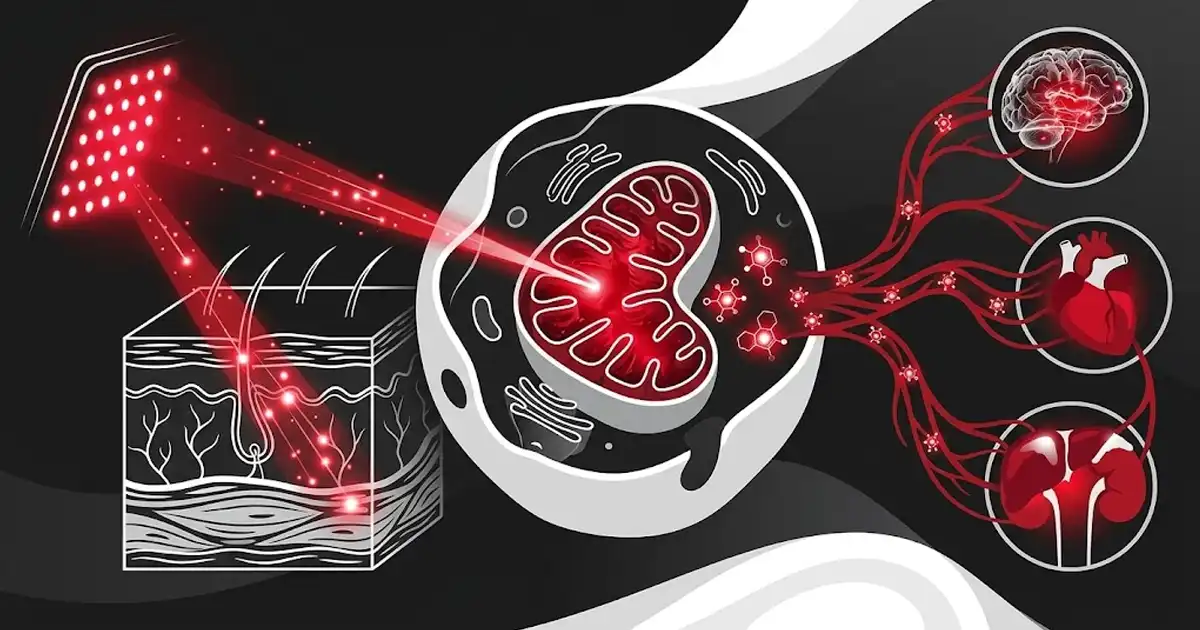
In 1985, Endre Mester and his two sons published a summary of twenty years of research on lasers, focusing on fifteen biological systems. In it, they articulated the principle that still shapes the field today: low energy stimulates cells, while high energy inhibits them.
The Context of the Time
In the mid-1980s, the medical laser had become a common tool in surgery, but primarily for cutting and coagulation. The idea that low-intensity light could alter the behavior of cells without destroying them remained a fringe and controversial concept. Publishing this review in *Lasers in Surgery and Medicine*, the field’s leading journal, amounted to bringing the topic to the attention of the community that matters.
It is also a text that passes on knowledge. The article is authored by Endre Mester, as well as by A. F. Mester and A. Mester, his sons, who have continued his work.
What This Publication Covers
This is a review of the authors’ experimental and clinical work, not a new study. The information provided in the abstract is as follows.
- The publication briefly reviews the authors' experimental and clinical use of lasers over a twenty-year period.
- The effects of the laser were studied in fifteen biological systems.
- Low-energy laser radiation has a stimulating effect on cells.
- High-energy radiation, on the other hand, has an inhibitory effect.
- The authors recommend the use of laser therapy to stimulate healing in cases of non-healing ulcers.
The abstract does not specify the energy thresholds separating the two regimes, the wavelengths, or the nature of the fifteen systems studied. Therefore, this information is not included here.
What We Know Today About the Mechanism
The contrast between stimulation at low doses and inhibition at high doses was later referred to as hormesis, or the Arndt-Schulz curve: the biological response does not increase indefinitely with dose; rather, it reaches an optimum and then declines. Today, this is one of the reasons cited to explain the contradictory results observed across different studies.
At the cellular level, the prevailing explanation involves the absorption of red and near-infrared light by mitochondrial cytochrome c oxidase and by light-sensitive ion channels, with implications for energy production and cellular signaling. Again, these models were developed after the 1985 paper was published.
Limits You Should Know
This publication is a review written by the authors about their own work, without any study selection methodology or independent evaluation. This format, which was common at the time, leaves the door open to a favorable presentation of the results. The abstract provides no figures, sample sizes, or technical parameters, which makes the stated rule unverifiable as it stands.
Forty years have now passed. The recommendation to use lasers on non-healing ulcers should be viewed as the well-reasoned opinion of a pioneering team in 1985, rather than as an indication validated by current standards of evidence.
Its place in the history of photobiomodulation
This is Mester’s most frequently cited and most quotable text. The phrase “low energy stimulates, high energy inhibits” has become the organizing principle of photobiomodulation—the principle that justifies referring to a therapeutic window rather than maximum power. The entire modern approach to dosimetry, expressed in joules per square centimeter, stems directly from this insight, which was first articulated in 1985.
Frequently Asked Questions
Who wrote this article?
Three authors, as listed in PubMed: Mester E, Mester A. F., and Mester A. These are the discoverer of the effect and his sons, who continued his work.
What does “low energy” actually mean?
The abstract does not provide any numerical values. The thresholds used today are based on later research, not on this article. Any numerical values attributed to this text would be an extrapolation.
Why does high energy inhibit cells?
The authors observe the phenomenon without explaining it. Current hypotheses point to excessive oxidative stress and tissue heating beyond a certain threshold, but these hypotheses were developed after this publication.
Reference
Mester E, Mester AF, Mester A. The biomedical effects of laser application. Lasers Surg Med, 1985. PMID 3982191. View the study on PubMed
This summary is provided for informational purposes only and does not constitute medical advice. Photobiomodulation is not a substitute for prescribed treatment. Consult a healthcare professional.