Domínguez-Morras, C., et al. - Non-optical interventions for myopia control in children: a systematic review and meta-analysis
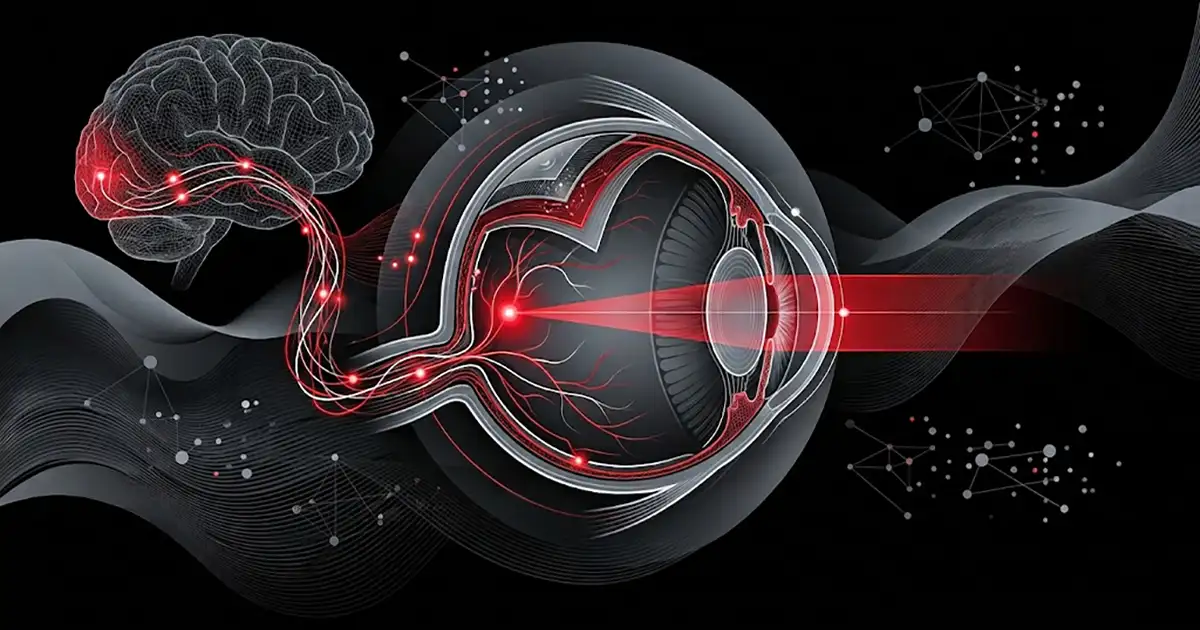
This meta-analysis reports that repeated exposure to low-intensity red light is associated with a slowdown in eye lengthening in myopic children, with a reduction of 0.26 mm in axial length. Nutritional supplementation did not reach statistical significance.
What this study measured
The authors evaluate two non-pharmacological and non-optical approaches to controlling myopia in children: repeated low-intensity red light, delivered by a specialized ophthalmic device, and nutritional supplementation. Myopia could affect half of the world’s population by 2050.
This review follows the PRISMA guidelines and is registered in PROSPERO under number CRD420261301596. Only randomized trials conducted in children and adolescents aged 0 to 18 years were included. The primary outcomes were axial length and spherical equivalent, with the risk of bias assessed as RoB 2. A total of 18 articles involving 2,438 participants were included.
Key Findings
The two interventions do not have the same level of evidence.
- Axial length under low-intensity red light: mean difference of -0.26 mm (95% CI: -0.34 to -0.18).
- Refractive progression: mean difference of +0.60 diopters (95% CI 0.42 to 0.78), interpreted as a protective effect.
- Very high heterogeneity in these results: I² greater than 97%.
- Nutritional supplementation on axial length: -0.22 mm (95% CI -0.44 to 0.00), a modest and non-significant effect.
- Scope: 18 articles, 2,438 participants aged 0 to 18, PROSPERO CRD420261301596.
The authors note reassuring findings regarding long-term safety, provided that the recommended protocols are followed.
How photobiomodulation works for this indication
The mechanism remains hypothetical and is not demonstrated here. The proposed explanation involves the absorption of red light by mitochondrial cytochrome c oxidase, with potentially increased ATP production in retinal and choroidal tissues, as well as modulation of oxidative stress and local inflammation. These effects could influence choroidal circulation and the signals governing eye growth, although the mechanism has not been established.
Limits You Should Know
The most important limitation concerns the nature of the device. This is a specialized ophthalmic device that delivers a specific wavelength and power level to the eye under medical supervision. These results cannot under any circumstances be applied to skin use, a red light panel, a face mask, or a full-body device. This indication requires ophthalmic monitoring.
Heterogeneity exceeds 97%: results vary widely from one study to another, and the pooled mean should be interpreted with caution. The authors note the absence of a standardized strategy for discontinuing treatment and the lack of long-term data in diverse pediatric populations. The nutritional aspect yields a negative result: there is insufficient evidence to demonstrate a clinically relevant effect on axial growth.
What This Means in Practice
For a family dealing with progressive myopia, repeated low-intensity red light therapy is one of the options discussed in pediatric ophthalmology. The choice of device and the frequency of monitoring are determined by an ophthalmologist. No device intended for use on the skin may be repurposed for this use.
Frequently Asked Questions
Does red light really slow the progression of myopia in children?
In this meta-analysis of 18 studies involving 2,438 children and adolescents, repeated low-intensity red light exposure is associated with a reduction in axial length of 0.26 mm (95% CI -0.34 to -0.18) and a refractive effect of +0.60 diopters. However, heterogeneity exceeds 97%. This is an association observed in trials, not an individual guarantee.
Can a red light therapy panel be used to treat nearsightedness?
No. The studies analyzed are based on a specific ophthalmic device, calibrated for the eye and used under medical supervision. A panel, face mask, or full-body device intended for use on the skin does not provide the same wavelength or exposure geometry. Exposing the eye to equipment not designed for that purpose poses a risk.
Do dietary supplements help slow the progression of nearsightedness?
In this review, nutritional supplementation was associated with a -0.22 mm effect on axial length (95% CI -0.44 to 0.00), which is therefore not statistically significant. The authors conclude that there is insufficient evidence to demonstrate a clinically relevant effect and describe this approach as a form of functional support.
Reference
Domínguez-Morras C, Paniagua García M, Castro Garrido I, et al. Non-Pharmacological and Non-Optical Interventions for Myopia Prevention and Control in Children: A Systematic Review and Meta-Analysis. Children (Basel), 2026. PMID 42509940. View the study on PubMed
This summary is provided for informational purposes only and does not constitute medical advice. Photobiomodulation is not a substitute for prescribed treatment. Consult a healthcare professional.