Caldieraro, M.A., and Cassano, P. - Transcranial and Systemic Photobiomodulation in Major Depression: A Systematic Review
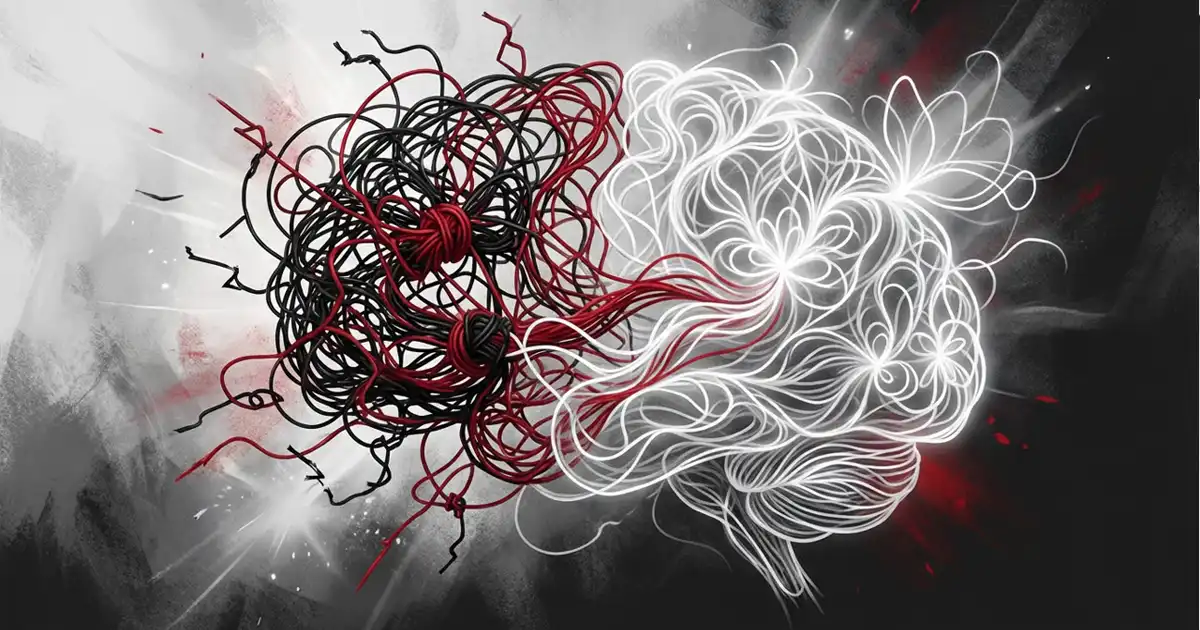
This publication is a systematic review of 17 studies on transcranial and systemic photobiomodulation in major depressive disorder. The authors describe an antidepressant effect and good tolerability, while highlighting the heterogeneity of the protocols and the absence of an appropriate control group in most clinical studies.
What this study measured
First, a methodological note, as it affects how the results should be interpreted: this is a systematic review without a meta-analysis, not a meta-analysis of randomized trials. No pooled estimate of the effect is provided. The scope of the review is major depressive disorder, not cognitive functions; the review reports no findings on memory, attention, or processing speed.
The authors searched the MEDLINE and EMBASE databases in July 2017, with no restrictions on date or language. The selected studies had to focus primarily on diagnosed depression and present original data. Review articles and studies not focused on depression were also included, solely for the section on mechanisms.
Key Findings
The review is qualitative and distinguishes between animal data and human data.
- 17 studies were included, focusing specifically on major depressive disorder
- Literature review conducted in July 2017 in MEDLINE and EMBASE
- Animal models: benefits described as comparable to those of antidepressant medications
- Clinical studies: significant antidepressant effect reported and good tolerability
- No pooled effects, no confidence intervals: the publication does not include a meta-analysis
The authors conclude that the available data provide preliminary support for the potential of non-retinal photobiomodulation as a new treatment for depression.
How photobiomodulation works for this indication
The primary mechanism proposed is the improvement of mitochondrial metabolism following the absorption of near-infrared energy by cytochrome c oxidase, resulting in increased ATP production. Red and near-infrared light is thought to penetrate the skull and modulate the cerebral cortex; an indirect effect is also hypothesized when the light is not delivered transcranially. The authors also discuss other pathways relevant to depression, particularly inflammatory ones. All of this remains at the hypothetical stage.
Limits You Should Know
The authors themselves point out that the clinical studies are heterogeneous in terms of the populations included and the treatment parameters, and that most lack an appropriate control group. Their conclusion is explicitly presented as preliminary, which in itself constitutes a cautious—or even negative—outcome relative to expectations.
There are two additional caveats. The literature review dates from July 2017: studies published since then are not included. Furthermore, the absence of a meta-analysis precludes any quantitative assessment of the benefit: claiming that photobiomodulation would lower a depression score by a specific number of points would not be supported by this publication. Finally, the review does not address cognitive functions, contrary to what the abbreviated title might suggest.
What This Means in Practice
Major depressive disorder is a condition that requires medical diagnosis and follow-up. This review does not provide evidence to support changes in clinical management or to define guidelines for its application. Above all, it indicates that there is evidence suggesting a need for higher-quality controlled trials to clarify the efficacy, effectiveness, and safety profile.
Frequently Asked Questions
Is this publication a meta-analysis of randomized trials?
No. This is a systematic review without a meta-analysis, which includes both preclinical and clinical studies. No statistical pooling of the results was performed, so no overall efficacy figure can be derived from it. Any presentation of this work as a meta-analysis of randomized trials would be inaccurate.
Can photobiomodulation replace an antidepressant?
Nothing in this review suggests this. The clinical studies included are few in number, heterogeneous, and often lack an appropriate comparator. Prescribed antidepressant treatment should never be discontinued or modified without consulting the physician who initiated it.
What does this review say about treatment tolerance?
The authors report good tolerability in the clinical studies reviewed and describe the approach as low-risk and inexpensive. However, the abstract does not specify the nature or frequency of the adverse effects observed. The authors explicitly call for further clarification of the safety profile in future studies.
Reference
Caldieraro MA, Cassano P. Transcranial and systemic photobiomodulation for major depressive disorder: A systematic review of efficacy, tolerability, and biological mechanisms. Journal of Affective Disorders, 2019;243:262-273. PMID 30248638. DOI 10.1016/j.jad.2018.09.048. https://doi.org/10.1016/j.jad.2018.09.048
This summary is provided for informational purposes only and does not constitute medical advice. Photobiomodulation is not a substitute for prescribed treatment. Consult a healthcare professional.